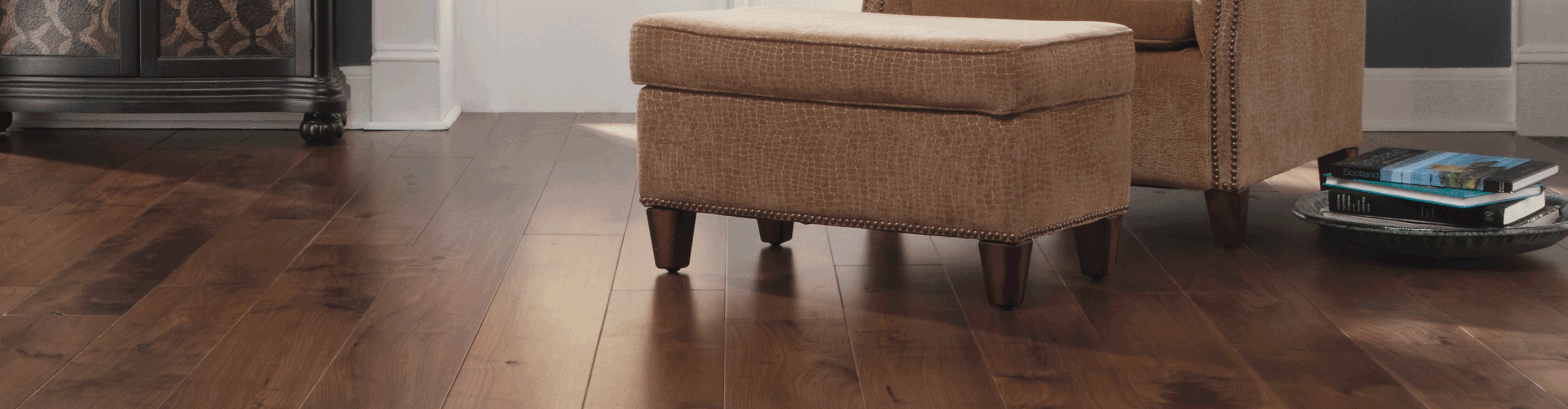
When it comes to tone and colour, walnut hardwood is one of the most unique flooring options available and a charming addition to any home. Walnut hardwood is not just for flooring. Furniture, decor, woodwork, and decking are all common uses for the species, largely because of its visual character and natural durability. Walnut trees grow in the Eastern United States and are less abundant than other hardwood species. They grow higher than fifty feet tall and can reach an extremely wide diameter.
What makes walnut stand out as a hardwood flooring choice is the combination of its rich, dark colour range and the warmth it brings to a room. Among hardwood species, walnut sits in the mid-range for hardness and toward the upper end for visual richness. It is a species that rewards buyers who prioritize character and aesthetics alongside performance.
The walnut hardwood species generally has a straight grain, with some irregular graining naturally occurring. The lines of the grain in walnut can be parallel to the direction of tree growth or random and erratic, with few knots. That combination of straight and sometimes irregular grain is what makes walnut hardwood floors one-of-a-kind.
On a finished floor, walnut's grain variation creates visual movement and depth that more uniform species simply do not have. Rather than reading as a flat, consistent surface, a walnut floor draws the eye across the room. For buyers who want a floor that feels handcrafted and natural rather than perfectly uniform, walnut's grain is often cited as one of its strongest selling points.
There are two main colours of walnut, depending on where in the tree the wood comes from, with both having a slight purple undertone. Sapwood, which is the outer layer closest to the bark, is white and gray. The heartwood varies in colour from light to rich, dark brown. Because walnut has deep brown tones, light stains tend not to show up as clearly as darker stains.
Unlike many other hardwoods, walnut lightens in colour over time. That gradual shift is the opposite of what happens with Brazilian cherry, which darkens as it ages, and it is an important factor to consider when choosing a stain colour. If you select a stain that complements the floor at installation, account for the fact that the natural wood tone underneath will shift lighter over the years.
In terms of interior style, walnut's warm, dark tones pair especially well with mid-century modern, contemporary, and transitional spaces. The depth of the heartwood anchors rooms with lighter walls and furnishings, while the sapwood variation adds contrast that keeps the floor from feeling flat.
While walnut is one of the lower-rated hardwoods for hardness compared to other flooring options, it still performs well in the right applications. American black walnut has a Janka hardness rating of approximately 1010. For context, red oak registers around 1290 and Brazilian cherry comes in at approximately 2350. That means walnut is meaningfully softer than oak and substantially softer than the hardest exotic species.
That difference in hardness matters most in high-traffic areas. Walnut is well suited to bedrooms, home offices, dining rooms, and living rooms with moderate foot traffic. It is a less ideal choice for busy entryways, hallways, or homes with large dogs that spend significant time on the floor.
Where walnut has a practical advantage is in how it handles the wear it does receive. The medium texture responds well to a matte finish, which reduces the visible appearance of scratches and scuffs. The natural darkness of the wood also helps hide dents and minor surface marks. For hardwood flooring types comparisons that factor in hardness, that context can help you narrow down the right species for each room in your home. For guidance on keeping walnut in good shape after installation, see hardwood floor care.
Buyers considering walnut are most often also comparing it to oak, white oak, or domestic cherry. Here is how they stack up.
For a broader look at how these and other species compare, visit the hardwood species guide.
Walnut is an excellent flooring choice for homeowners who prioritize visual character and warmth. Its rich, dark tones and naturally varied grain give it a level of distinction that more common species like oak do not always achieve. It performs well in bedrooms, living rooms, home offices, and dining rooms. Because walnut scores lower on the Janka hardness scale than oak, it is better suited to moderate-traffic areas than to busy entryways or homes with large, active pets. In the right setting, walnut is one of the most rewarding hardwood options available.
No. Oak is harder than walnut by a meaningful margin. American black walnut has a Janka hardness rating of approximately 1010, while red oak registers around 1290. That gap means oak is more resistant to dents and surface damage in high-traffic conditions. For buyers who love the look of walnut but need a harder floor, oak is the more practical alternative. For lower-traffic rooms where durability demands are less intense, walnut's slightly softer rating is rarely a significant issue in day-to-day use.
Walnut is more susceptible to scratching than harder species like oak or hickory, but it is not unusually delicate for a domestic hardwood. The medium texture of walnut responds well to a matte finish, which diffuses light and reduces how visible scratches and scuffs appear. The natural darkness of the wood also helps minor surface marks blend in rather than stand out. Keeping up with regular sweeping to remove grit and using felt pads under furniture legs are the most effective ways to protect walnut floors from everyday wear.
Thank you for contacting Carpet One Floor & Home. Your local flooring expert will reach out to you regarding your inquiry.